


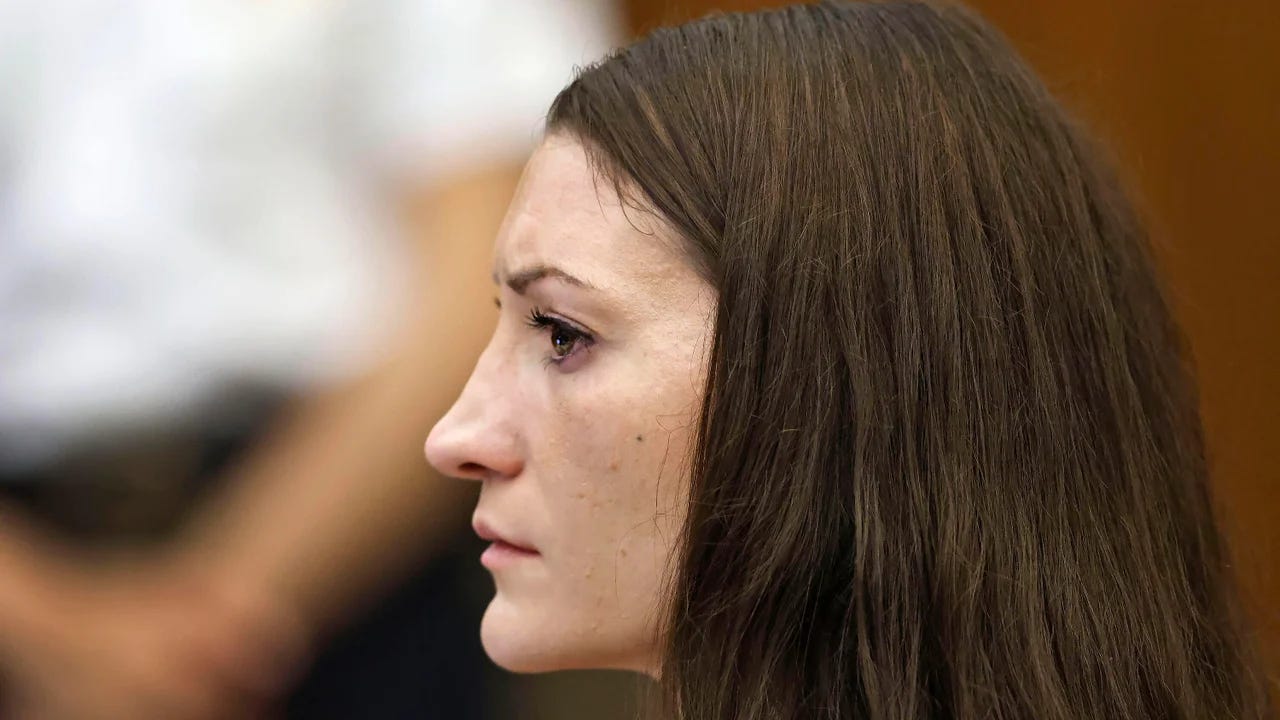
Three children are dead. Any discussion of the Lindsay Clancy trial that begins anywhere else has already lost its moral footing.
That fact does not make the legal question easy. It makes it harder.
The public wants a clean story: either a mother was gravely ill and failed by the people charged with helping her, or she deliberately murdered her children and must be punished accordingly. Those stories are emotionally satisfying because they assign the horror to a single source. The trial does not permit that convenience.
The question for the jury is not whether postpartum illness is real. It is. It is not whether psychiatric suffering can be profound. It can. And it is not whether the deaths of three children demand grief, outrage, and an accounting. They do.
The legal question is narrower and more exacting: at the time of the killings, was Lindsay Clancy criminally responsible for what she did?
That distinction is not semantic. It is the entire case.
Recent testimony has focused on Clancy’s psychiatric treatment, medications, reported decline, family observations, and the information she searched for before the children’s deaths. AP’s trial coverage and its reporting on the search evidence make clear why the facts will be so difficult for any jury to process. AP’s report on pre-death searches
A Diagnosis Explains Nothing by Itself—and Excuses Nothing by Itself
There is a temptation, particularly online, to treat a diagnosis as a verdict. It is not.
A psychiatric diagnosis may be indispensable evidence. It may help a jury understand perceptions, beliefs, impulses, judgment, cognition, or the collapse of ordinary functioning. It may help explain conduct that otherwise appears unimaginable. But diagnosis is not a magic word. The law does not ask whether a defendant had a diagnosis, took medication, suffered from depression, or was in crisis. It asks what the illness did to the defendant’s legally relevant capacities at the time of the act.
That is not a cold or technical distinction. It is the safeguard that prevents criminal responsibility from being decided by labels, headlines, or our personal reaction to a tragedy.
The converse is equally important. The fact that a defendant’s actions are horrific does not answer the criminal-responsibility question either. Horror is not proof of a legally sound mental state. A jury may conclude that a person did something dreadful and still confront credible evidence that severe mental illness impaired the very capacities the law requires for criminal blame.
Those are not contradictory propositions. They are the difficult work of a criminal justice system that claims to distinguish what happened from what a person was capable of understanding or controlling when it happened.
No one should confuse that inquiry with indifference toward the victims. The children are not a footnote to a debate about psychiatric terminology. They are the reason the question of responsibility matters so much.
The Evidence Will Not Arrive Neatly Sorted
The prosecution’s theory, as publicly reported, is that the killings were intentional and premeditated. The defense position is that Clancy’s postpartum psychiatric condition left her not criminally responsible. AP’s overview of the trial
Both sides will point to facts that the public will be tempted to treat as conclusive. They are not.
A search history can look like planning. It can also be evidence of terror, suicidal thinking, a desperate search for an explanation, or a person trying to understand an unraveling mind. A medication record can look like evidence that someone was receiving care. It can also raise questions about whether care was adequate, whether symptoms were recognized, and whether treatment itself was changing. Family testimony can establish warning signs. It can also reveal the terrible limits of what loved ones can see, understand, or stop.
None of that means all interpretations are equally persuasive. It means a criminal case cannot be responsibly decided by selecting one fact, attaching a preferred story to it, and calling the work finished.
“Not Criminally Responsible” Does Not Mean “Nothing Happens”
Public conversation about mental-responsibility defenses often collapses into a familiar accusation: the defendant is “getting away with it.” That phrase is usually more rhetorical than accurate.
A finding that a defendant is not criminally responsible is not a declaration that nothing happened, that no one suffered, or that the defendant is simply sent home. Reporting on this case notes that a lack-of-criminal-responsibility verdict would result in commitment to a state mental-health facility rather than an unqualified release. AP’s August 18 report
That result may not satisfy every person’s sense of retribution. It is not designed to. Criminal punishment rests on culpability. If a person’s mental condition negated the legal capacity necessary for culpability, the state is not being soft by recognizing that limit; it is applying the premise that punishment is for the blameworthy, not merely for the tragic.
That premise should not be controversial. It is one of the few restraints that keeps criminal law from becoming a mechanism for converting every catastrophe into vengeance.
The Medical-System Questions Are Real—But They Are Not the Jury’s Only Job
The Clancy case rightly raises broader questions about postpartum psychiatric care: whether warning signs were recognized, whether treatment and monitoring were adequate, whether medications were appropriately managed, and whether families are given meaningful guidance when a loved one is deteriorating.
Those questions matter. They may have consequences in civil litigation, professional regulation, institutional reform, and ordinary family decision-making. Reporting indicates that the events also overlap with a malpractice lawsuit concerning the care Clancy received. AP’s report on psychiatric-care testimony
But it is a mistake to make the criminal jury carry the full weight of those failures—or to pretend that proof of a system failure automatically resolves individual criminal responsibility. A jury must decide the case under the legal standard it is given, based on the evidence it hears. It cannot rewrite mental-health care. It cannot punish clinicians who are not on trial. It cannot use a murder verdict to express anger at a health-care system, however warranted that anger may be.
The public, however, has a wider obligation. It should be asking why families in crisis so often have to recognize psychiatric emergency without a clear pathway to immediate, coordinated, competent help.
We Can Hold More Than One Truth at a Time
The urge to choose one moral frame is understandable. It is also inadequate.
We can say, without qualification, that three children deserved to live and that their deaths are devastating. We can say that a parent’s severe mental illness, if proved, should be taken with the utmost seriousness. We can demand rigorous accountability from every institution that may have missed danger. And we can insist that a criminal verdict be based on the law of responsibility—not on slogans about mothers, mental illness, punishment, or sympathy.
That is not pulling punches. It is refusing to use the dead children as props in a culture-war argument, or to use a severely ill defendant as a symbol in a debate that has little patience for legal precision.
The Clancy trial is not a referendum on whether postpartum illness is real. It is not a referendum on whether the medical system fails women. It is not a referendum on whether grief should produce punishment.
It is a criminal trial. Its question is brutal and specific: whether the prosecution has established criminal responsibility in the face of evidence that the defense says shows a profound psychiatric break.
A just result requires the jury to take the children’s deaths with full seriousness. It also requires the jury to take the legal meaning of mental illness with full seriousness.
Anything less is not justice. It is performance.
This essay addresses public reporting and general principles of criminal responsibility. It does not express a view on what the jury should decide, and it does not replace the governing jury instructions or the trial record.